
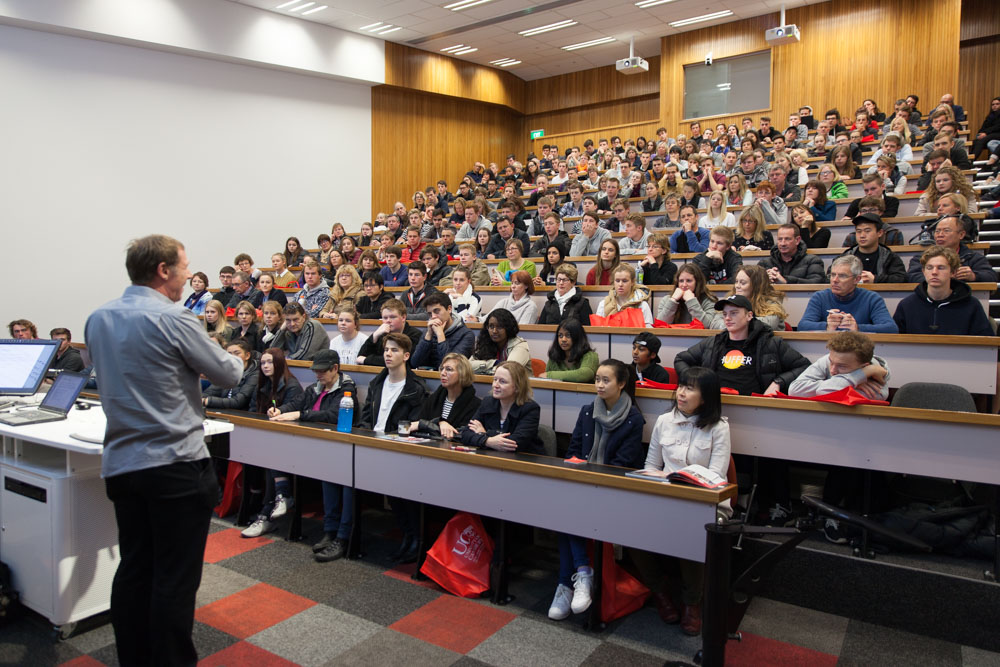
The journey studying abroad often begins with a rush of emotional excitement, anticipation, and a sense of possibility. You imagine stepping onto a campus on the other side of the world, only to be met with the immediate reality of an overwhelming to-do list. And at the very top of that list, for millions of aspiring students, stands one requirement: IELTS.
For many, it feels like a gatekeeper a single score separating them from their future. But what if we reframed that idea? Instead of seeing the IELTS as an obstacle, we can recognize it for what it truly is: the first foundational step in a much larger journey. A step that not only demonstrates your English proficiency but also equips you with the communication skills needed to succeed whether in a lecture hall in Toronto, a research lab in Melbourne, or a seminar room in London.
Why the IELTS Became the Global Gold Standard
Before we dive into strategies, it’s useful to understand why the International English Language Testing System holds so much sway. Its story begins in the 1980s, a time of accelerating global student mobility. British, Australian, and North American universities needed a reliable, standardized way to assess the English proficiency of applicants from non-native speaking countries. A patchwork of different exams was inefficient and unreliable.
In 1989, a collaboration between the British Council, IDP: IELTS Australia, and Cambridge Assessment English led to the launch of the IELTS. It was revolutionary in its focus on practical language skills. Unlike some tests that leaned heavily on obscure vocabulary or complex grammar puzzles, the IELTS was designed to reflect real-life use of English, while reading academic journal, or writing a university essay.
Its band score system, from 1 (non-user) to 9 (expert user), provided a clear, nuanced picture of a candidate’s ability. Academic institutions loved its rigorous, consistent format. Over the decades, its recognition exploded. Today, it’s accepted by over 11,000 organizations in more than 140 countries. It’s not just for study; it’s a key requirement for global professional registration and immigration pathways. This deep-rooted history of trust and practical application is exactly why your IELTS preparation is so critical.
IELTS Preparation Tips: From Strategy to Success
Passing the IELTS isn’t about being the best English speaker in the room; it’s about understanding the game and playing it smart. Here’s how to structure your attack. Understanding the Test Format: First, know your enemy. The IELTS has four sections: Listening (30 mins), Reading (60 mins), Writing (60 mins), and Speaking (11-14 mins). It comes in two types: Academic use for university entry and General Training for migration/work. You are almost certainly taking the Academic version. Each section is scored in half-band increments, and your overall score is the average.
Skill-Specific Strategies:
Listening: The audio is played only once. Train your focus. Practice with diverse accents (British, Australian, American, Canadian). Read the questions ahead of time the tape gives you moments to do this. Your answer might come in a flash; don’t get stuck on one question and miss the next three.
Reading: Time is your fiercest opponent. You have 60 minutes for 3 long texts and 40 questions. Don’t read the passage first. Skim the questions, identify keywords, and then scan the text for those words or their synonyms. Practice differentiating between main ideas and supporting details.
Writing: You’ll describe a graph, chart, or process. Structure is everything: Introduction, Overview (state the main trends), and Specific Details. Avoid giving your opinion.
Writing (Task 2 – Essay): This carries more weight. Use a clear essay structure: Introduction (topic + your thesis), 2-3 Body Paragraphs (topic sentence, explanation, example), Conclusion. Vocabulary range and grammatical accuracy are key here. Read editorials from newspapers like The Guardian or The Economist to see sophisticated arguments in action.
Speaking: It’s a conversation, not an interrogation. Fluency and coherence matter more than a perfect accent. For Part 2 (the long turn), use the one-minute preparation time wisely—jot down key points to talk about. Expand your answers. Instead of “Yes, I like photography,” say, “Yes, I’m quite passionate about street photography because it allows me to capture untold stories in everyday life.
Practice: Use Cambridge IELTS practice books they’re the closest to the real thing. Simulate exam conditions. Record your speaking practice and cringe through the playback—it’s the fastest way to improve.
Study Abroad Guides: Choosing Your Adventure
Country & University Selection: Look beyond global rankings. Consider: Academic Fit: Does the university have a strong department for your specific field? Look at faculty research and course modules.
Cost of Living: Tuition is one thing; rent, food, and transport are another. Cities like London, Sydney, and Toronto are incredible but expensive. Consider countries like Germany (with low-to-no tuition at public universities) or the Netherlands, which offer English-taught programs. Post-Study Opportunities: Does the country offer a post-study work visa? For instance, Canada’s Post-Graduation Work Permit or Australia’s Temporary Graduate Visa can be a crucial stepping stone to international work experience. Culture & Lifestyle: Can you see yourself living there for 2-4 years? Research climate, social culture, and support networks for international students.
The Application Process Demystified
- Research (12-18 months before): Shortlist universities and note deadlines.
- Prepare Documents: Transcripts, Letters of Recommendation (LORs), Statement of Purpose (SOP), CV/Resume. Your SOP is your story—make it compelling and specific to that university.
- Standardized Tests: IELTS/TOEFL, plus possibly GRE/GMAT.
- Apply: Usually through university portals or common systems like UCAS (UK) or Direct Applications.
- Some courses may require an interview.
- The final, crucial step. Start as soon as you have your Confirmation of Enrollment (CoE) or CAS (UK).
Scholarship Listings: Funding Your Dream
Let’s tackle the elephant in the room: cost. Yes, it’s significant, but funding is available if you’re proactive.
Where to Look:
University-Specific Scholarships: Always check the “Funding” or “Scholarships” page of your chosen university’s website. These can be merit-based, need-based, or country-specific.
Government Scholarships: Prestigious options like the UK’s Chevening Scholarships, the US Fulbright Program, or Australia Awards are highly competitive but can cover everything.
External Organizations: Foundations, trusts, and corporations in your home country often offer scholarships for study abroad. Local research is key.
Scholarship Application: Treat it like a job application. Tailor every essay. If they ask, “How will you contribute to your home country?” have a clear, authentic vision. Align your goals with the scholarship’s mission. Meet deadlines early. A strong IELTS score strengthens your case immensely, as it demonstrates academic readiness.
English Learning Resources
Your English journey shouldn’t stop at Band 7.5. The real test begins in Week 1 of your degree.
Immersion is Key: Start living in English now
Listen: Switch to English-language podcasts on topics you enjoy (The Daily, Science Vs). Watch films and series without subtitles, then with English subtitles.
Read Widely: Don’t just stick to textbooks. Read novels, long-form journalism, and blogs in your field. This builds “passive vocabulary” that will suddenly become active when you need it.
Write Regularly: Start a journal in English. Comment on articles online. The physical act of constructing sentences matters.
Speak: Find a language exchange partner on apps like Tandem or HelloTalk. Practice discussing complex topics, not just the weather.
Career & University Application Advice
This is where it all comes together—positioning yourself as a strong candidate. Creating a Winning Statement of Purpose: This is not your CV in paragraph form. It’s a narrative. Hook them in the first paragraph. Explain why: What sparked your interest in this field? What have you done to pursue it? Why this specific program and university? Mention a professor you’d like to work with or a specific research initiative. Conclude with your future goals and how this degree is the essential bridge. Be specific & be professional.
Securing Stellar Recommendations: Choose recommenders who know you well academically or professionally. Provide them with a “cheat sheet”—your CV, your SOP draft, and bullet points on specific projects or achievements you’d like them to highlight. Make it easy for them to write you a great letter. Building a Career-Ready Profile: Studying abroad is also about employability. Join university clubs, seek internships, and use the campus career center. That global network you build will be one of your most valuable assets.
Case Study
1: Priya – Engineering in Germany
Priya, from Demra Dhaka, targeted German public universities for their low tuition and strong engineering reputation. Her IELTS preparation focused heavily on Writing, as she knew she’d need to write technical reports. She scored a Band 7.5. The bigger challenge was securing a blocked account for her student visa and finding accommodation in a competitive city like Munich. Her advice: “Start the visa paperwork the second you get your admission letter. Join Facebook groups for Indian students in Germany—they have the most current, practical advice you won’t find on official sites.
Study Abroad FAQ
I need an IELTS Band 6.5 overall, but I keep getting 5.5 in Writing. What specific steps can I take to improve just that one score?
This is common. First, get a detailed diagnostic. Use an official marking service or a qualified tutor to pinpoint if it’s Task Achievement, Coherence, Vocabulary, or Grammar (LEC Abroad offer free guidance of IELTS & Study Abroad). Then, attack that weakness. If it’s Task Achievement (Task 1), practice identifying all key features of a chart. If it’s Vocabulary, create topic-specific word lists (e.g., for environment, learn “carbon footprint, “deforestation”). Write two Task 2 essays per week under timed conditions and have them reviewed.
How do I prove financial records for a student visa if my parents are self-employed and don’t have typical salary slips?
This is a major hurdle for many. Countries accept various proofs: tax returns for the last 2-3 years, business license documents, audited business account statements, or a letter from a chartered accountant confirming the business’s income and your parents’ share. The key is documentation that is official, consistent, and clearly shows sufficient, legitimate funds.
I want to start my study abroad journey from Dhaka. How can I get started?
You can start with LEC Abroad. Our team will guide you through university selection, IELTS preparation, application processing, scholarships, and visa support. You can book a free consultation anytime.
Is it worth applying for a highly competitive scholarship like Chevening if my profile feels average?
Average is subjective. Chevening and similar programs look for leadership potential and a clear career impact plan, not just perfect grades. Have you led a community project? Overcome a significant challenge? Do you have a realistic, passionate plan to create change in your field back home? If you can articulate that powerfully in your essays and interviews, you are a contender. Don’t self-reject.
I’m terrified of the cultural shift and loneliness. How do students practically cope with the first few months abroad?
Acknowledge that this fear is normal. Practically, *force* yourself to say ‘yes’ in the first month. Attend every orientation event, join at least one student society (even if it’s scary), and make a rule to speak to one new person in your class each week. Explore your new city deliberately. Also, schedule regular calls with home, but limit them so you’re forced to engage locally. Most universities have fantastic well-being and counseling services—use them without stigma. It’s not a sign of failure; it’s a tool for success.
Conclusion
The path to studying abroad is a marathon, not a sprint. It’s a series of deliberate steps: conquering the IELTS, crafting your application narrative, hunting for funding, and preparing mentally for the leap. Each step builds not just your dossier, but your resilience and vision.
Remember, that IELTS score is more than a number it’s proof you can communicate your ideas to the world. The scholarship hunt teaches you to advocate for yourself. The visa process tests your diligence. By the time you board that plane, you’ll have already grown in ways you can’t yet imagine.