



Overview
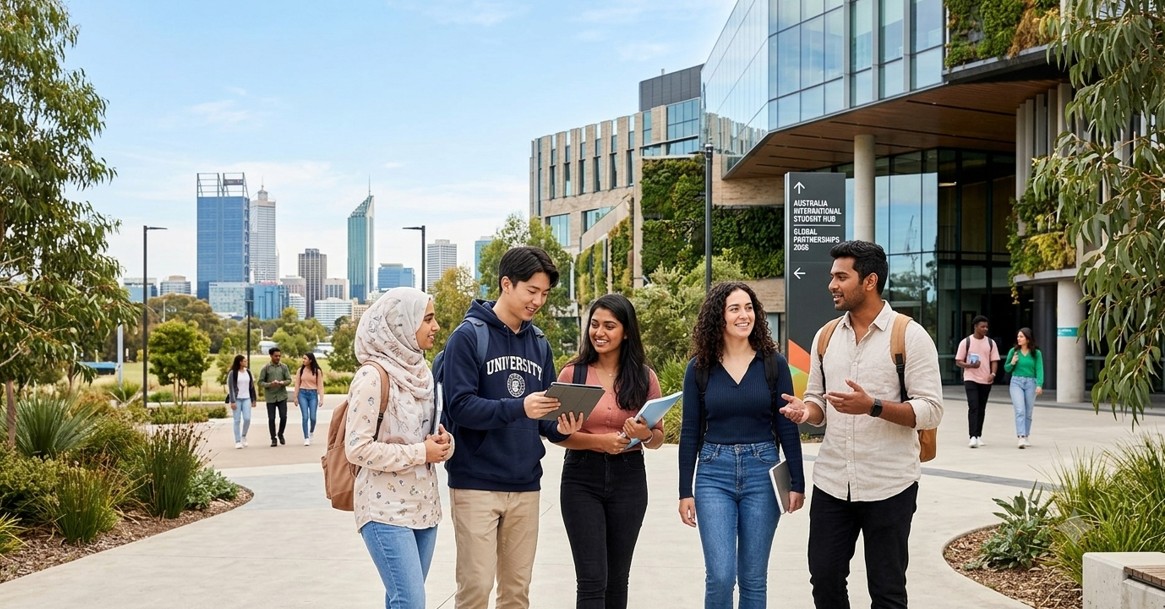
This foundational pathway introduces international students to the fundamental mathematical, physical, and problem-solving principles required for tertiary study in electrical engineering. Delivered through Western Sydney University International College, the curriculum balances theoretical scientific knowledge with essential academic skill development. Learners explore fundamental circuit concepts, physical mechanics, and quantitative reasoning, establishing the necessary technical baseline to transition into the Bachelor of Engineering (Honours) program at Western Sydney University.
What You'll Learn
Engineering Mathematics: Advanced algebraic techniques, basic calculus, trigonometry, and vector analysis applied to engineering problems.
Physics and Energy Principles: Core concepts of mechanics, wave motion, electricity, magnetism, and physical systems analysis.
Introductory Circuit Concepts: Fundamentals of electrical properties, charge movement, basic circuit components, and measurement logic.
Quantitative Problem-Solving: Analytical techniques for modeling physical scenarios, interpreting empirical data, and applying logical deduction.
Academic Literacy and Scientific Writing: Structured technical reporting, scholarly inquiry methods, research integrity, and oral communication skills.
Learning Outcomes
Upon completing this initial stage, students will understand essential mathematical, physical, and electrical principles that underpin engineering disciplines. They will be capable of applying algebraic and physical formulas to solve basic technical problems and presenting scientific data through structured academic reports. Furthermore, graduates will demonstrate the critical thinking capabilities, quantitative rigor, and independent study strategies necessary to succeed in undergraduate electrical engineering coursework.

 Western Sydney University